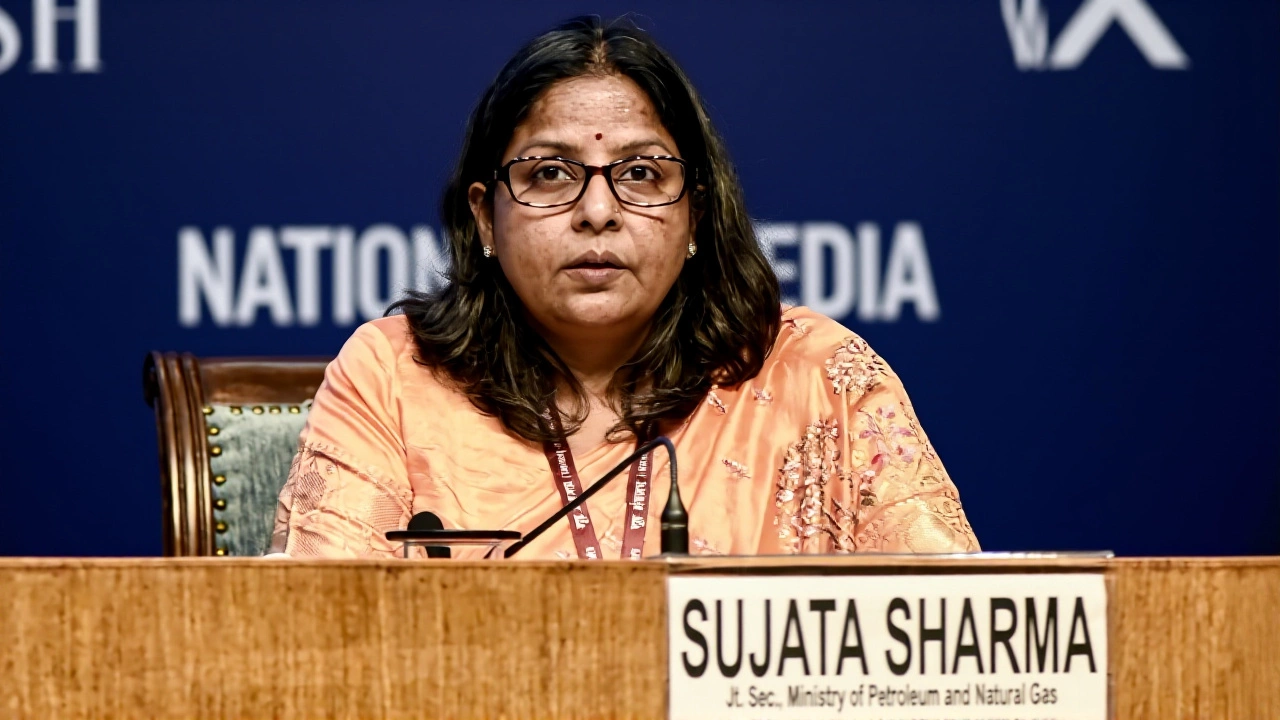
When Sushma Sharma, a senior official at the Ministry of Petroleum and Natural Gas, addressed reporters in New Delhi recently, she had one clear message: panic buying is unnecessary. Despite global headlines about instability in the Middle East, India’s domestic LPG supply remains robust. There are no reported shortages at any distributor level across the country.
The government’s stance is firm. While geopolitical tensions in West Asia continue to ripple through global energy markets, New Delhi insists that its citizens need not worry about empty cylinders or soaring prices for now. The twist? This assurance comes even as commercial LPG supplies have only partially recovered, sitting at around 70% capacity. So, how is the government keeping the home fires burning?
The Numbers Behind the Assurance
Let’s look at what’s actually happening on the ground. According to the ministry, over 147,000 LPG cylinders have been sold this month alone. That figure includes both domestic and commercial demand. Interestingly, there’s been a surge in smaller cylinders. In just one day prior to the briefing, more than 81,000 five-kilogram cylinders were sold. These smaller units are proving popular among households that can’t afford or don’t need larger tanks.
But it’s not just about cylinders. The push for piped natural gas (PNG) is gaining serious momentum. Approximately 527,000 new PNG connections have been activated recently. This shift is strategic. By moving urban consumers onto pipelines, the government reduces pressure on cylinder distribution networks. It’s a classic case of diversifying supply channels to mitigate risk.
Digital adoption is another key factor. Online booking for LPG has skyrocketed to nearly 98%. This means almost every transaction happens digitally, reducing physical crowds at distributor centers and making inventory tracking much more efficient. Most distributors are now open on Sundays too, ensuring weekend convenience for users who might otherwise face delays.
Cracking Down on Black Markets
Here’s the thing: supply isn’t just about production; it’s about control. The government has launched an aggressive campaign against illegal hoarding and black marketing. Since March 2026, authorities have conducted over 128,000 raids nationwide. During these operations, they seized more than 59,000 LPG cylinders intended for the black market.
To track every single cylinder, the ministry has implemented the Delivery Authentication Code (DAC) system with strict rigor. The target was 90% adoption, but usage has already hit 92%. This digital trail ensures that cylinders reach legitimate consumers and aren’t diverted for resale. It’s a significant step toward closing loopholes that previously allowed profiteering during shortage periods.
The crackdown extends to alternative fuels as well. The Coal Ministry has instructed Coal India and Singareni Collieries to increase coal supply to states for small and medium consumers. This provides a backup option if LPG availability tightens further, particularly in rural areas where coal remains a common cooking fuel.
Prioritizing Critical Sectors
Not all users are treated equally when supplies get tight. The government has established a clear hierarchy for commercial LPG allocation. Hospitals and educational institutions are at the top of the list. Their uninterrupted operation is non-negotiable. Following them are critical industries: pharmaceuticals, steel, automotive, seeds, and agriculture. These sectors are deemed vital for economic stability and food security.
Migrant workers also receive special attention. The supply of five-kilogram Free Trade LPG (FTL) cylinders for migrant laborers has been doubled based on average daily consumption data from early March 2026. This move aims to support those living in temporary accommodations who rely on affordable cooking fuel. Additionally, awareness camps have been set up in roughly 7,000 locations to educate the public about smaller cylinder options and safe usage practices.
Global Tensions and Maritime Safety
The backdrop to all this is the ongoing crisis in West Asia. Geopolitical instability often translates into disrupted shipping routes, which directly impacts India’s energy imports. However, the Ministry of Ports, Shipping and Waterways reports that Indian sailors in the Gulf region remain safe. In the last 24 hours prior to the briefing, no incidents involving Indian-flagged vessels were recorded.
Mandeep Singh Randhawa, Director at the Ministry of Ports, Shipping and Waterways, highlighted that over 2,700 Indian seafarers have been safely repatriated so far, including 49 in the past day alone. Crucially, the oil tanker Des Garima, carrying 97,000 metric tons of crude oil, passed through the Hormuz Strait without incident. This suggests that while risks exist, major supply lines remain open for now.
The Ministry of External Affairs, represented by spokesperson Ranbir Jayaswal, confirmed that all developments in West Asia are being monitored closely. The goal is to ensure that international tensions do not spill over into domestic energy security or maritime transport safety.
What Should Consumers Do?
The government’s advice is straightforward: avoid panic buying. Hoarding petrol, diesel, or LPG does nothing but exacerbate perceived shortages. Instead, citizens are encouraged to use digital platforms for bookings and consider switching to electric or induction cooktops where possible. Energy conservation is framed not just as an economic necessity but as a patriotic duty during uncertain times.
For those unable to switch immediately, the extended booking intervals—25 days for urban areas and 45 days for rural regions—are designed to smooth out demand spikes. These measures, combined with increased refinery output and prioritized distribution, form a multi-layered strategy to keep India’s kitchens running smoothly despite global headwinds.
Frequently Asked Questions
Is there really a shortage of LPG in India right now?
No, the Ministry of Petroleum and Natural Gas states that domestic LPG supply is normal and there are no reported shortages at any distributor level. While commercial supply is at 70% capacity, household availability remains unaffected. The government emphasizes that rumors of scarcity are unfounded.
Why are 5kg cylinders selling faster than usual?
There has been a significant surge in demand for smaller 5kg cylinders, with over 81,000 sold in a single day recently. This trend reflects consumer caution and budget constraints, as smaller cylinders require less upfront cost. The government has responded by doubling supplies for migrant workers and launching awareness campaigns.
How is the government preventing black marketing of gas cylinders?
Authorities have conducted over 128,000 raids since March 2026, seizing more than 59,000 cylinders. They are also enforcing the Delivery Authentication Code (DAC) system, which tracks cylinders from factory to consumer. DAC adoption has reached 92%, significantly reducing diversion opportunities.
Are Indian ships safe in the West Asia conflict zone?
Yes, according to the Ministry of Ports, Shipping and Waterways, Indian sailors are safe, and no incidents involving Indian-flagged vessels have been reported in the last 24 hours. The oil tanker Des Garima recently passed through the Hormuz Strait without issue, indicating that major shipping routes remain operational.
Which sectors get priority for commercial LPG supply?
Hospitals and educational institutions are given the highest priority to ensure essential services continue uninterrupted. Following them are critical industries such as pharmaceuticals, steel, automotive, seeds, and agriculture. These sectors are deemed vital for national economic and food security.